
article
Can a Foreigner Invest in the US Stock Market? A 2026 Guide for Kenyans and Other Non-US Investors
Yes, non-US citizens can buy US stocks. Learn the routes from Kenya, the W-8BEN form, 30% dividend tax, estate tax risk, and rules for international students.
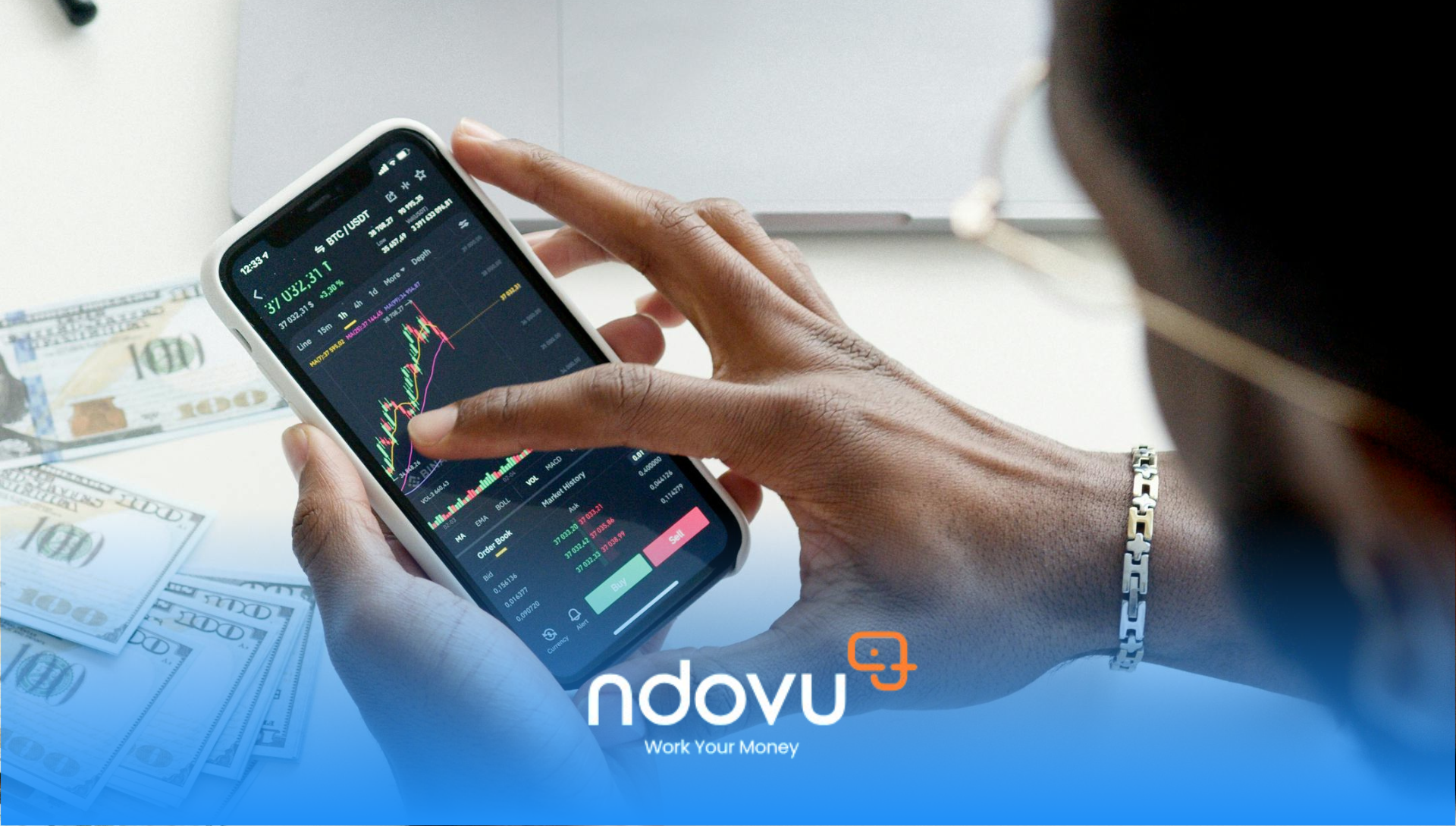
Yes. A foreigner can invest in the US stock market through a platform or broker that accepts non-US residents. You will usually sign a Form W-8BEN, pay 30% US tax on dividends (Kenya has no tax treaty with the US to reduce this), and pay no US tax on capital gains in most cases. Holdings of US shares above US$60,000 can also attract US estate tax.
Apple, NVIDIA, Microsoft, and the S&P 500 are some of the most talked-about investments in the world. If you live in Nairobi, Kigali, or anywhere outside the United States, a fair question follows: is the US market even open to you?
It is. US law does not require you to be a citizen or resident to own shares in American companies, and millions of investors around the world already do. Kenya has also abolished exchange controls, so residents are free to move money abroad to invest. What changes for a foreigner is the route in, the paperwork, and how you are taxed.
This guide explains all three in plain terms. It covers who counts as a foreign investor, the main ways to buy US stocks from Kenya, the forms you will sign, the US and Kenyan tax rules, and what international students in the US need to know before they invest. If you mainly want the practical steps, see our step-by-step guide to investing in US stocks from Kenya.
Who counts as a foreign investor in the US?
When people ask whether a non-US citizen can invest in the stock market, or whether a foreigner can invest in US stock market listings at all, the real question is how the US tax system sees you. Brokers and the IRS do not sort investors by passport alone. They sort them into US persons and nonresident aliens.
You are generally treated as a US person if you are:
a US citizen, including a dual citizen living in Kenya;
a green card holder (lawful permanent resident); or
a US tax resident under the IRS substantial presence test. Broadly, that means at least 31 days in the US this year and 183 days over three years, counting all days this year, a third of last year's days, and a sixth of the days the year before.
Everyone else is usually a nonresident alien. That includes a Kenyan living in Kenya, a Kenyan working in the Gulf or Europe, and in most cases, an international student in the US during their first five calendar years (more on students below).
This distinction matters because it decides which form you sign (W-8BEN for nonresident aliens, W-9 for US persons), how your dividends are taxed, and which platforms can accept you. Platforms built for international investors are set up for non-US persons, so check a provider's eligibility rules before you apply.
Can foreigners buy US stocks? Three ways to invest from Kenya
Yes. In practice, there are three main routes, and they differ mostly in cost, minimums, how you fund the account, and who regulates the provider.
1. A locally licensed investment platform
This is the simplest route for most Kenyans. You open an account in Kenya, fund it in shillings or dollars, and the platform buys US shares or ETFs for you through its own custodial arrangements. You never open a US brokerage account yourself.
On Ndovu, for example, you can buy fractional shares in US companies such as Apple, NVIDIA, Microsoft, Amazon, Meta and Tesla from USD 50 per holding, alongside global ETFs that track whole markets or themes. Ndovu is licensed by Kenya's Capital Markets Authority (CMA) as a Fund Manager and Investment Adviser, so you have a local regulator to turn to if something goes wrong.
Good for: beginners, smaller amounts, people who want local support and local funding options.
2. A Kenyan stockbroker or investment bank with global access
Some CMA-licensed stockbrokers and investment banks offer access to foreign markets on top of NSE trading, usually through a partner broker abroad. Minimums, fees and the range of markets vary a lot, so ask for the full fee schedule, including currency conversion and custody charges, before you sign up.
Good for: investors who already use a Kenyan broker and want one relationship for local and foreign shares.
3. International brokers for non-US residents
Several large international brokers accept clients from outside the US and give direct access to US exchanges, often with low trading commissions. The catch is that eligibility depends on your country of residence, and the list changes. A broker that accepts Kenyans this year may not next year.
Before you use an international broker, check:
that it currently accepts residents of Kenya (or your country) on its own website, not a third-party blog;
who regulates it, and whether that regulator offers any investor protection to non-residents;
how you will move money in and out (international wires carry bank charges and exchange-rate costs in both directions);
whether it is licensed or authorised to market to Kenyan residents. The CMA warns investors about unlicensed online platforms; see our guide to spotting legitimate investment platforms.
Good for: experienced, frequent traders with larger balances who are comfortable with offshore accounts and international transfers.
Quick comparison
Local licensed platform | Kenyan broker with global access | International broker | |
Regulator you can reach | CMA (Kenya) | CMA (Kenya) | Foreign regulator |
Typical starting amount | Low (fractional shares) | Varies, often higher | Often low, but transfer costs add up |
Funding | Local bank, often mobile money | Local bank | International wire |
Paperwork | Local KYC; foreign tax forms depend on the provider's setup | Local KYC + W-8BEN | Full offshore KYC + W-8BEN |
Best for | Beginners and regular savers | Existing broker clients | Active, experienced traders |
You can also get US exposure without picking individual companies. An S&P 500 or global index ETF spreads your money across hundreds of firms in one purchase. Our guide to index funds in Kenya explains how that works.
What you need to invest in US stocks as a foreigner
You do not need a US Social Security number, a US bank account or a US address. Requirements vary by provider, but most will ask for:
Identity: a national ID or passport.
Tax identity: your KRA PIN (or your home-country tax number).
Proof of address: sometimes a utility bill or bank statement.
A funding account: a bank account or, on some local platforms, mobile money.
Form W-8BEN: a US tax form confirming you are not a US person.
What is Form W-8BEN?
Form W-8BEN, Certificate of Foreign Status of Beneficial Owner for United States Tax Withholding and Reporting (Individuals), tells the broker or platform holding your US shares that you are a nonresident alien. That lets it withhold US tax at the right rate and stops it treating you as a US taxpayer.
Three things worth knowing, from the IRS instructions for Form W-8BEN:
You give it to your broker or platform, not to the IRS. The IRS says plainly: "Do not send Form W-8BEN to the IRS."
It expires. A W-8BEN generally stays valid from the date you sign it until the last day of the third calendar year after that. One signed in October 2026 is valid until 31 December 2029.
You must update it if your situation changes, for example, if you move to the US for long enough to become a US tax resident.
On the form you can enter your foreign tax identification number (for Kenyans, the KRA PIN). Part II, which claims a reduced treaty rate, does not apply to Kenyan residents, because Kenya and the US have no income tax treaty.
How are foreign investors taxed on US stocks?
Tax is where being a foreigner makes the biggest difference. Here is how the main US taxes apply to a nonresident alien living in Kenya.
Type of return | US tax for a nonresident alien in Kenya | Why |
Dividends | 30%, withheld before you are paid | No US–Kenya tax treaty to reduce the rate |
Capital gains (selling at a profit) | Usually 0% | Taxed only if you are in the US for 183 days or more in the tax year |
Interest on US bank deposits and most US Treasuries | Usually exempt (portfolio interest and bank deposit exemptions) | Specific IRS exemptions for nonresidents |
Estate tax on death | Can apply to US shares above US$60,000 | US shares are US-situs assets |
Dividends: 30% withholding
The US taxes dividends paid to nonresident aliens at a flat 30%, collected at source by the broker or platform. Many countries cut this to 15% or less through a tax treaty, but the IRS list of US tax treaties does not include Kenya, so Kenyan residents pay the full 30%. On US100ofdividends,youreceiveUS70.
This matters more for income-focused investors. Growth stocks that pay little or no dividend, such as many technology companies, are less affected.
Capital gains: usually not taxed by the US
If you buy a US share and later sell it for more, a nonresident alien generally owes no US tax on the gain. Under the US Treasury regulations (26 CFR 1.871-7), capital gains of a nonresident alien are taxed at 30% only if the person was in the US for 183 days or more during the tax year. For a Kenyan investing from Kenya, that will rarely apply. International students in the US are the main exception (see the student section below).
Estate tax: the risk most foreigners miss
This is the rule top-ranking guides often bury. If a nonresident alien dies holding US-situs assets worth more than US$60,000, their estate may have to file a US estate tax return and pay US estate tax. Shares in US companies count as US-situs assets, wherever the broker is based or the share certificates are held, and US-domiciled ETFs are generally treated the same way. The IRS estate tax FAQ for nonresidents sets out the filing rule.
US citizens get an exemption in the millions of dollars. Nonresidents effectively get only the first US60,000tax-free(throughaUS13,000 unified credit, and the threshold is not adjusted for inflation. Above that, rates rise in steps to a top rate of 40%.
Investors manage this risk by keeping US holdings modest, diversifying across markets, and holding funds domiciled outside the US. Whether a particular fund or platform structure is treated as US-situs is a technical question, so speak to a tax or estate planning adviser if your US holdings are growing.
What about tax in Kenya?
Kenya taxes income based on where it comes from. KRA's guidance on taxation of foreign income says income is only taxable in Kenya "if it accrued in or was derived from Kenya", with two exceptions: employment income a Kenyan resident earns abroad, and business carried on partly in Kenya and partly outside. Dividends and gains from US shares are not among those exceptions, so for most individual investors the 30% US tax on dividends is the only tax they pay on them. Rules can change, and individual situations differ (for example, if investing is part of a business you run), so keep your statements and dividend records and confirm your position with KRA or a registered tax agent.
Can international students invest in stocks in the US?
Yes, international students can invest in stocks, including students on F-1 and J-1 visas. So if you are asking "can an international student invest in stocks?", the answer is yes, with a few rules to respect. Buying and holding shares or funds is generally treated as passive investment, not work, so it does not breach visa rules on employment. Many Kenyan students in the US have savings sitting idle, and long-term investing is a legitimate use for them.
Where students need care is in how they invest.
Investing vs trading on an F-1 visa
F-1 students may only work in ways their status allows, such as limited on-campus jobs, CPT or OPT. Immigration lawyers, including the American Visa Law Group, draw a line between:
Passive investing: buying shares or ETFs and holding them for months or years. Generally fine.
Active day trading: frequent buying and selling that looks like a business or a job. This could be argued to be unauthorised self-employment, which puts status at risk.
There is no official number of trades that crosses the line, so the safest approach is a simple buy-and-hold strategy. A student who wants to trade actively should speak to their school's international student office or an immigration lawyer first.
Do students need an SSN to open an account?
Not necessarily. F-1 students can usually get a Social Security number only if they have a job or job offer, as Suffolk University's international student office explains. Some US brokers require an SSN or an ITIN (Individual Taxpayer Identification Number), while others that serve non-residents accept a passport and Form W-8BEN.
How students are taxed
For tax purposes, F and J students are usually "exempt individuals" for their first five calendar years in the US, according to IRS Publication 519. Their days in the US do not count towards the substantial presence test, so they stay nonresident aliens and pay 30% on US dividends.
Capital gains work differently for students, and many guides get this wrong. The IRS explains that the 183-day rule for capital gains applies to F and J students physically present in the US for 183 days or more in a calendar year, even while they remain nonresidents (IRS: taxation of capital gains of nonresident students and scholars). A full-time student will usually pass 183 days, so net US-source capital gains for that year are generally taxed at a flat 30% (Kenya has no treaty to lower it). Students must also file the required US tax forms each year (Form 8843 at minimum, plus a nonresident return if they have taxable income).
After five calendar years, a student can become a US tax resident. At that point, they become a US person for tax purposes, which changes their forms, their tax, and which platforms can serve them.
Can a Kenyan student in the US use a Kenyan platform?
It depends on the provider's rules. Some Kenyan platforms can serve Kenyan citizens while they study abroad, as long as they are not US persons. Others require you to live in Kenya. Check with the platform before you sign up, and tell it if you become a US tax resident.
Risks to weigh before you invest in US stocks
The US market is large and liquid, but it is not risk-free. Before you invest, be clear about:
Market risk. US shares can fall sharply. The S&P 500 lost about a third of its value in a few weeks in early 2020 and fell roughly 19% in 2022. Money you need in the next year or two is usually better kept somewhere steadier, such as a money market fund.
Currency risk. Your returns are in dollars. If the shilling strengthens against the dollar, your gains shrink when converted back to KES; if it weakens, they grow. For people with dollar expenses (school fees abroad, travel, imports), holding dollar assets can actually reduce risk.
Concentration risk. A handful of very large technology companies make up a big share of US indices. Spreading money across sectors and markets, for example with an ETF, reduces dependence on any one company.
Costs. Look beyond the headline commission. Ask about currency conversion spreads, deposit and withdrawal fees, custody fees, and inactivity charges. Ndovu publishes its charges on its fee structure page.
Platform risk. Use a provider that is licensed, keeps client assets in custody separate from its own money, and explains clearly who holds your shares.
How to choose an international broker or platform as a non-US resident
Question to ask | What a good answer looks like |
Is it licensed, and by whom? | A named regulator you can verify, such as the CMA's licensee register |
Does it accept residents of my country? | Stated on its own site and confirmed at sign-up |
Who holds my shares? | A named custodian, with client assets held separately |
What does it cost, end to end? | A published fee schedule, including FX and withdrawals |
How do I fund it and withdraw? | Clear options, timelines, and limits |
Can I buy fractional shares and ETFs? | Yes, if you are starting small or want diversification |
Does it handle the W-8BEN? | Yes, with a reminder before it expires |
How to buy US stocks from Kenya, step by step
Decide your goal and time frame. US shares suit money you can leave invested for five years or more. Keep your emergency fund in something you can access quickly.
Choose your route. For most first-time investors, a CMA-licensed local platform is the simplest start. Experienced traders may prefer an international broker that accepts Kenyan residents.
Open and verify your account. Have your ID or passport and KRA PIN ready. Expect to confirm you are not a US person and to sign a W-8BEN (or equivalent declaration).
Fund your account. Use the funding options your provider offers. Note the exchange rate you get when shillings are converted to dollars.
Pick your investments. Start broad, for example, an S&P 500 or global ETF, and add individual companies if you want. Fractional shares let you own part of an expensive stock like NVIDIA or Microsoft with a small amount.
Invest regularly. Adding a fixed amount every month (dollar-cost averaging) smooths out the effect of buying at a high point.
Keep records and review yearly. Save statements and dividend records for tax, renew your W-8BEN before it expires, and rebalance if one holding has grown too large.
Want to see what you could hold? Browse the US stocks available on Ndovu, or read our beginner's guide to international capital markets first.
The bottom line
A foreigner can invest in the US stock market, and from Kenya it has never been easier. The questions that matter are which route suits you, what the 30% dividend tax and the US$60,000 estate tax threshold mean for your plans, and, for students, keeping investing passive.
Ready to start? Explore US stocks and global ETFs on Ndovu, compare costs on our pricing page, or talk to our team if you have questions about your situation.
Disclosure:
Ndovu is a regulated Robo-advisory platform operated by Ndovu Wealth Limited (‘NWL’). NWL is a Fund Manager licensed by the Capital Markets Authority (Kenya).
The information provided on this platform and the products and services offered are intended solely for persons in regions and jurisdictions where such distribution and utilization are in accordance with local laws and regulations. Ndovu does not promote its services in regions where it lacks the necessary licenses; It is exclusively available to persons residing in countries where it holds a valid license or has regulated partners. Ndovu does not extend its services to citizens of the United States, Canada, Japan, and other restricted territories.
Disclaimer:
All ETF products are subject to risk, including country/regional, liquidity, and currency risks. Market prices of securities within the ETF may rise and fall, sometimes rapidly and unpredictably.
While ETFs provide diversification through exposure to a basket of securities, they do not eliminate the risk of loss. Diversification does not ensure a profit or protect against a loss. These are non-CIS products and are registered by the SEC.
Frequently asked questions
Can a foreigner invest in the US stock market?
Yes. US law does not restrict share ownership to citizens or residents. A foreigner can buy US stocks and ETFs through a licensed platform or broker that accepts residents of their country.
Can foreigners buy US stocks without a US bank account or SSN?
Yes. Most platforms serving non-US residents need only your ID or passport, a local tax number such as a KRA PIN, and a signed Form W-8BEN. You fund the account from your local bank or another supported method.
Can a non-US citizen invest in the stock market if they live in the US?
Yes, but their tax status matters. A non-citizen who passes the substantial presence test or holds a green card is a US person for tax purposes and is taxed like a US resident. They should use a platform that accepts US persons and check eligibility before opening an account.
Can international students trade stocks in the US?
International students can invest in stocks. Buy-and-hold investing is generally fine on an F-1 visa. Frequent day trading could be seen as unauthorised work, so check with your international student office or an immigration lawyer before trading actively.
Do foreigners pay tax on US stock gains?
Usually not, if they live outside the US. Nonresident aliens are taxed on US capital gains only if they are in the US for 183 days or more in the year, which commonly catches international students. Dividends are a different story: they are taxed at 30% for Kenyan residents.
What is the minimum to invest in US stocks from Kenya?
It depends on the provider. With fractional shares, you can start small. On Ndovu, US shares are available from USD 50.
Is it safe to invest in US stocks from Kenya?
The legal route is well established. The main risks are market and currency swings and using an unlicensed platform. Check that your provider is licensed, for example on the CMA licensee register, and that it explains who holds your shares.
Is it legal for Kenyans to invest in US stocks?
Yes. Kenya has abolished exchange controls, according to the Kenya Investment Authority, so residents can send money abroad to invest. The US places no citizenship restriction on owning listed shares. The main thing to check is that your platform or broker is properly licensed.
What time can I trade US stocks from Kenya?
The main US exchanges (NYSE and Nasdaq) open from 9:30 am to 4:00 pm New York time. In Kenya (EAT, UTC+3), that is 4:30 pm to 11:00 pm while the US is on daylight saving time (mid-March to early November) and 5:30 pm to midnight for the rest of the year. US daylight saving time ends on 1 November 2026. On most platforms, you can place orders outside these hours, and they are filled when the market opens.
What happens to my US shares if I die?
They pass to your heirs under your platform's and your estate's rules, but if your US-situs assets exceed US$60,000, your estate may need to file a US estate tax return and pay US estate tax. Name beneficiaries where your provider allows it and take estate planning advice for larger holdings.